
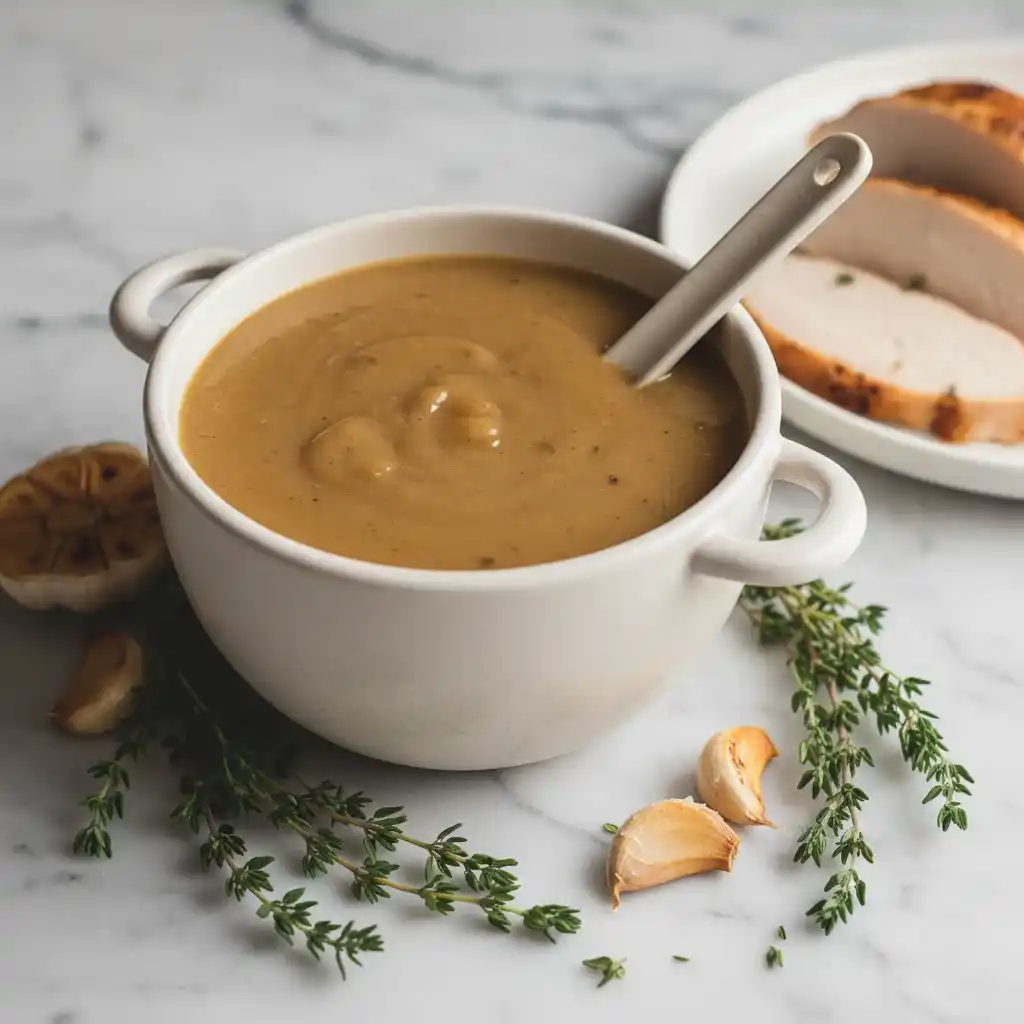
I’ll be honest — for the longest time, gravy used to scare me. It looked simple, yet somehow always ended up too thin, too thick, or just… missing that magic.
But once I learned how to make turkey gravy from scratch — the kind that turns silky and rich with a deep golden shine — everything changed. Now it’s the part of the meal I look forward to the most.
There’s something almost satisfying about standing over the stove, whisk in hand, watching butter and flour come together before you slowly pour in those flavorful turkey drippings.
The smell alone makes the kitchen feel alive — buttery, herby, and warm. And when it finally thickens into that smooth, glossy sauce, you can’t help but feel proud of what you’ve created.
This turkey gravy isn’t fancy or complicated — it’s made with simple ingredients and a bit of patience.
It’s the kind that clings perfectly to slices of turkey and mashed potatoes, rich but not heavy, smooth but full of flavor.
I’ll show you exactly how to make it step-by-step, so it turns out just as beautiful and delicious every single time.
Turkey Gravy Recipe
Ingredients
- 4 cups turkey drippings (from roasted turkey, strained) or low-sodium turkey broth
- 4 tbsp unsalted butter
- 4 tbsp all-purpose flour
- 1 small onion, finely minced
- 3 cloves roasted garlic (or 2 raw cloves, finely minced)
- 1 sprig fresh thyme (plus extra for garnish)
- 1 tsp finely chopped fresh sage (or ½ tsp dried)
- ½ tsp black pepper, freshly ground
- ½ tsp fine salt (adjust to taste)
- ½ tsp soy sauce or Worcestershire substitute (for color and depth, optional)
Instructions
- Place a medium saucepan over medium heat and melt the butter until foamy. Add the minced onion and sauté for 2–3 minutes, stirring often, until soft and translucent but not browned.
- Stir in the roasted garlic, mashing it lightly with the back of your spoon so it blends smoothly. Add thyme and sage, and cook for another minute until fragrant.
- Sprinkle in the flour evenly. Stir continuously for 2–3 minutes until the mixture turns golden brown and smells nutty — this will give your gravy its rich flavor and prevent a raw flour taste.
- Slowly pour in the warm turkey drippings (or broth) while whisking constantly. Start with a small amount to create a smooth paste, then gradually whisk in the rest to avoid lumps.
- Bring the mixture to a gentle simmer. Cook for 6–8 minutes, whisking frequently, until it thickens to a velvety consistency that coats the back of a spoon.
- Add salt, pepper, and soy sauce (if using). Taste and adjust seasoning as needed — you want a deep, savory, slightly herby flavor with a hint of roasted garlic warmth.
- Remove the thyme sprig and discard. Pour the gravy through a fine mesh strainer for an extra-smooth texture if desired. Serve hot in a gravy boat or bowl, garnished with a fresh thyme sprig.
- Store leftover gravy in an airtight container in the refrigerator for up to 3 days. Reheat gently on the stove, whisking in a splash of broth if it thickens too much.
How Do I Make Smooth And Lump-Free Turkey Gravy?
Getting smooth, silky gravy is all about timing and technique. If you whisk it right, your gravy will turn out glossy and perfect every time.
- Whisk constantly: Keep whisking while adding liquid to the roux — it stops lumps from forming.
- Warm broth helps: Add warm turkey drippings or broth slowly instead of cold liquid.
- Add liquid gradually: Pour a little at first, whisk until smooth, then slowly add more.
- Use a fine mesh strainer: If you still see small lumps, strain the gravy before serving.
- Cook on medium heat: Too high heat can make the flour seize and form lumps.
Can I Make Turkey Gravy Without Drippings?
Yes, you can make delicious gravy even if you don’t have turkey drippings — it just needs flavorful ingredients.
- Use turkey or chicken broth: A rich stock gives a similar savory base.
- Add butter and herbs: Sage, thyme, and a bit of onion add depth of flavor.
- Include roasted vegetables: Cook carrots and onions first for a natural roasted flavor.
- Season deeply: Use pepper, salt, and a little soy sauce for color and richness.
- Simmer longer: Let the gravy cook 10–15 minutes to develop flavor like real drippings.
How Do I Thicken Turkey Gravy If It’s Too Thin?
Thin gravy can be saved in minutes with a few simple tricks.
- Make a slurry: Mix 1 tablespoon of flour or cornstarch with 2 tablespoons of water and whisk into the gravy.
- Simmer longer: Cooking on low heat thickens it naturally as water evaporates.
- Add a butter-flour paste: Mix equal parts butter and flour, whisk in small pieces until gravy thickens.
- Don’t rush: Let it bubble gently for 2–3 minutes after adding thickener.
Why Did My Turkey Gravy Turn Out Lumpy Or Grainy?
Lumpy or grainy gravy means the flour wasn’t mixed correctly or cooked properly.
- Cook the flour well: Whisk flour in butter for at least 2 minutes to remove raw taste.
- Add liquid slowly: Pour broth a little at a time while whisking fast.
- Avoid overheating: Boiling too hard makes lumps hard to dissolve.
- Strain if needed: Use a fine sieve to make it smooth again.
Can I Make Turkey Gravy Ahead Of Time?
Yes, and it actually tastes better after resting!
- Make up to 3 days early: Store in an airtight container in the fridge.
- Reheat slowly: Warm it over low heat while whisking often.
- Add broth if thick: A few spoons of warm stock will bring back the perfect consistency.
- Taste again before serving: Flavors may mellow, so adjust salt and pepper.
What Can I Use Instead Of Flour To Thicken Turkey Gravy?
If you want a flour-free option, there are easy alternatives that work just as well.
- Cornstarch: Mix with cold water before adding — gives a glossy finish.
- Arrowroot powder: Great for clear and slightly shiny gravy.
- Mashed potatoes: Add a spoonful for a creamy, rustic texture.
- Pureed cooked vegetables: Blend cooked carrots or onions into the gravy.
How Do I Fix Gravy That’s Too Salty?
Don’t panic — salty gravy can be balanced easily with a few kitchen tricks.
- Add unsalted broth: It dilutes the salt without ruining the flavor.
- Mix in mashed potatoes or rice: They absorb extra salt quickly.
- Stir in cream or milk: Softens the sharp salty taste.
- A small bit of sugar: Just a pinch helps balance the saltiness.
Why Does My Gravy Taste Bland, And How Can I Make It Richer?
If the flavor feels flat, it just needs a little boost of aroma and depth.
- Add herbs and spices: Thyme, sage, rosemary, and black pepper add life.
- Use roasted garlic or onions: They bring a warm, savory tone.
- Add a splash of soy sauce: Deepens the color and gives umami flavor.
- Simmer longer: Letting it cook for 5–10 minutes enriches the taste naturally.
How Do I Make Gluten-Free Turkey Gravy?
You can enjoy thick, smooth gravy without any flour — it’s simple and delicious.
- Use cornstarch or rice flour: They thicken easily without gluten.
- Mix with cold broth first: This avoids lumps when you add it to hot gravy.
- Whisk well: Stir constantly for smooth results.
- Simmer briefly: Gluten-free thickeners need less time to cook.
How Do I Prevent The Gravy From Separating Or Becoming Oily?
Separation happens when fat isn’t mixed in properly — control the heat and stir right.
- Skim off extra fat: Before cooking, remove some fat from drippings.
- Whisk constantly: Keeps the butter or fat blended smoothly.
- Use gentle heat: Boiling breaks the sauce; simmering keeps it stable.
- Add a small cube of butter at the end: It brings shine and blends fat evenly.
How Can I Make Dairy-Free Turkey Gravy?
You can skip butter and still make creamy, flavorful gravy.
- Use olive oil or margarine: Replace butter in equal amounts.
- Cook onions first: They build a deep flavor base without dairy.
- Use vegetable or turkey broth: It keeps the taste rich and balanced.
- Blend in roasted garlic: Adds creaminess and aroma naturally.
How Do I Keep Turkey Gravy Warm For Serving?
Warm gravy makes every plate more enjoyable, so keep it cozy till mealtime.
- Use a small slow cooker: Keeps it warm on low without overcooking.
- Thermal gravy boat: Holds heat for over an hour.
- Stovetop on low flame: Stir occasionally to prevent skin from forming.
- Add a splash of broth before serving: Keeps texture smooth and fresh.
Can I Use Cornstarch Instead Of Flour For Gravy?
Yes — it’s easy and gives you a clear, shiny finish instead of creamy.
- Mix with cold liquid first: 1 tablespoon cornstarch per cup of broth.
- Add slowly: Pour into simmering broth while whisking.
- Cook just 2–3 minutes: Overcooking breaks the starch and thins it out.
- Add butter for flavor: Helps balance the texture.
Why Did My Gravy Turn Out Too Thick Or Gluey?
Over-thick gravy just needs a little thinning and patience.
- Add warm broth slowly: Whisk in a bit at a time until smooth.
- Keep stirring: It loosens up as you whisk over low heat.
- Don’t add too much flour: 1 tablespoon per cup of broth is usually enough.
- Taste and adjust: More liquid might need a pinch of extra seasoning.
Can I Freeze Leftover Turkey Gravy?
Yes, freezing keeps it fresh for future meals without losing flavor.
- Cool completely first: Avoid condensation and freezer burn.
- Store in airtight containers: Small portions are easy to reheat later.
- Freeze up to 3 months: Thaw in the fridge overnight before reheating.
- Reheat gently: Warm slowly on low heat while whisking for smooth texture.
You May Also Like To Check Out These Recipes
- Oven Roasted Sweet Potatoes Wedges
- Roasted Sweet Potato Black Bean Bowl
- Creamy Pumpkin Soup With Roasted Seeds
- Hatch Chile Chicken Enchiladas
- Hatch Chile Corn Chowder
- Hatch Chile Cream Cheese Dip
- Hatch Green Chile Queso Dip
- Creamy Pumpkin Soup With Roasted Seeds
- Mexican Street Corn Soup
- Cucumber Soup
- Zucchini Soup
- Chilled Avocado Soup
- Mexican Street Corn White Chicken Chili
- Tomato Soup
- Vegan Potato Soup
- Baked Chicken Wings
- Chicken Egg Rolls
- Sesame Crusted Tuna Steaks With Ginger-Soy Sauce
- Traditional Banh Mi With Grilled Chicken
- Mango Chicken Curry
- Lamb Meatballs
- Authentic Thai Red Curry Shrimp
- Perfect Poached Eggs
- Stuffed Bell Peppers With Ground Beef
- Cheesy Green Chili Chicken And Rice Casserole
- Mexican Street Corn White Chicken Chili
- Hatch Chile Chicken Enchiladas
- Jalapeño Chicken
- Melt In Your Mouth Chicken
- Greek Chicken Tenders
- Grilled Chicken Kebabs
- Strawberry Chicken Salad
- Chicken Caesar Salad
- Chicken Salad Croissant Sandwich
- Chicken Macaroni Salad
- Slow Cooker Chicken Tacos
- Grilled Chicken Breast
- Grilled Chicken Wings
- Grilled Chicken Thighs
- Skillet Lemon Herb Chicken Breasts
- Grilled Chicken Salad
- Grilled Hot Honey Chicken
- Chicken Broccoli Casserole
- Chicken Parmesan
- Buffalo Chicken Dip
- Chicken And Dumplings
- Crockpot Butter Chicken
- Creamy Cajun Chicken Pasta
- Chicken Tortilla Soup
- Chicken Fettuccine Alfredo
- Cheeseburger Soup
- Roast Turkey