
I still remember the first evening I made slow roasted beef tenderloin for guests at my table.
The house was quiet except for the low hum of the oven, and the aroma slowly filling the room felt almost like a promise.
I wasn’t rushing, and for once I wasn’t trying to impress anyone. I just wanted a meal that felt steady and sincere, the kind you can trust to turn out right when you give it patience.
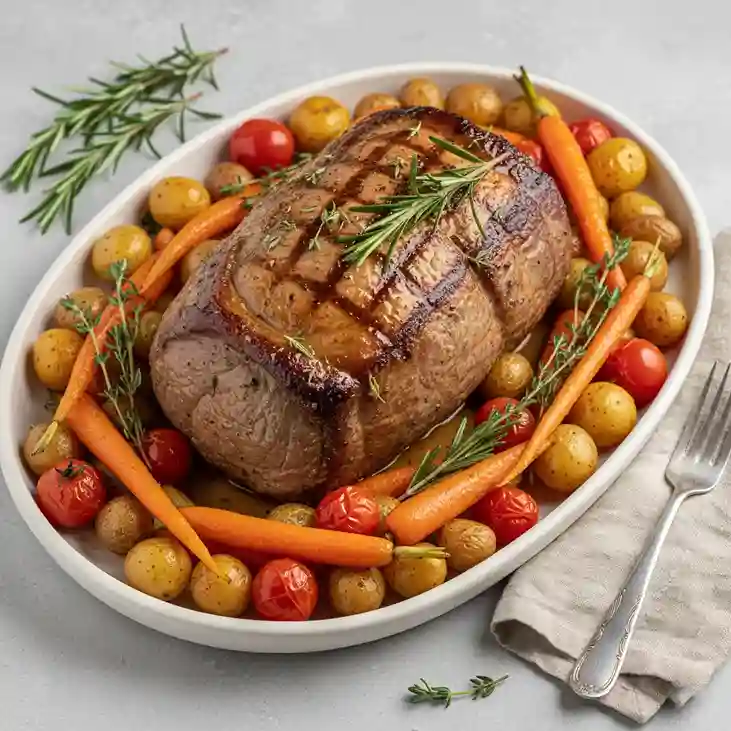
As the roast rested, the vegetables glistening beside it, I felt that small spark of pride you get when a dish looks exactly the way you hoped.
The tenderloin sliced so smoothly it caught me off guard, and the juices were rich enough to coat every bite without needing anything extra.
The vegetables had softened in the pan drippings, turning sweet and full of depth.
Since then, I’ve kept this method close because it never disappoints. The slow heat, the simple seasonings, the gentle browning at the end—each part works quietly but with purpose.
It’s the kind of meal that doesn’t shout for attention yet ends up stealing it the moment it reaches the table.
And every time I make it, it brings back that same warm feeling from the first night I tried it.
Slow Roasted Beef Tenderloin Recipe
Ingredients
- 1 whole beef tenderloin roast (about 3 to 3.5 lbs), trimmed and tied
- 2 tbsp olive oil
- 2 tsp fine sea salt
- 1 tsp freshly ground black pepper
- 1 tsp garlic powder
- 1 tsp onion powder
- 1 tbsp fresh rosemary leaves, finely chopped
- 1 tbsp fresh thyme leaves, finely chopped
- 1 lb baby potatoes, rinsed and dried
- 10–12 whole baby carrots, peeled
- 1 cup cherry tomatoes
- 3 garlic cloves, lightly crushed
- 3–4 rosemary sprigs
- 3–4 thyme sprigs
- 2 tbsp butter, softened
- 1 tbsp fresh lemon juice
Instructions
- Remove the tenderloin from the refrigerator 45 minutes before cooking so it can come toward room temperature. This helps it roast evenly.
- Preheat your oven to 250°F (120°C). Line a large roasting pan or an oven-safe baking dish with parchment or lightly oil it.
- Pat the beef tenderloin completely dry with paper towels. Moisture prevents browning, so don’t skip this.
- Rub the roast with olive oil on all sides. Mix the salt, pepper, garlic powder, onion powder, chopped rosemary, and chopped thyme in a small bowl, then massage the seasoning blend evenly over the entire surface of the meat.
- Arrange the baby potatoes, carrots, cherry tomatoes, and crushed garlic around the roast. Scatter the rosemary and thyme sprigs over the vegetables so they can infuse as they cook.
- Place the pan in the oven and roast slowly for 1 hour and 30 minutes to 1 hour and 50 minutes, depending on your preferred level of doneness. The internal temperature should be around 130°F (54°C) for medium-rare or 135°F (57°C) for medium.
- When the tenderloin reaches your target temperature, remove the pan from the oven but keep everything in the pan. Loosely tent the roast with foil and let it rest for 20 minutes. Resting allows the juices to redistribute, so the meat stays tender and moist.
- While the meat rests, increase your oven temperature to 475°F (245°C). Once heated, remove the foil and return only the roast to the oven for 8–10 minutes to create a deep, golden crust. Keep a close eye on it.
- In a small bowl, mix the softened butter with lemon juice. As soon as you pull the roast from the hot oven, brush this butter mixture generously over the top. The heat will melt it instantly, creating a glossy, aromatic finish.
- Arrange the vegetables around the roast on a serving platter. Spoon any juices from the pan over both the meat and vegetables. Garnish with fresh rosemary or thyme if you want a touch of color.
- Slice the tenderloin into thick medallions and serve immediately while warm and incredibly tender.
How Do You Know When Slow Roasted Beef Tenderloin Is Cooked Properly?
The goal is to help you feel confident while checking doneness without cutting into the meat too early.
When you roast beef tenderloin at a low temperature, the most reliable way to check if it’s ready is by using an instant-read thermometer.
This tool tells you exactly what’s happening inside the roast so you don’t overcook it. Here’s what matters:
- Use an instant-read thermometer: Insert it into the thickest part of the roast to get the most accurate reading.
- Aim for the right internal temperature: Around 130°F for medium-rare or 135°F for medium.
- Allow resting time: Resting helps the juices settle inside the meat so it stays tender and moist when you slice it.
- Recheck after resting: You may notice a slight rise in temperature because the roast continues to warm inside even off the heat.
A good sign that it’s cooked well is when the knife slides through smoothly and each slice stays juicy without falling apart.
Why Roast Beef Tenderloin Slowly?
This question matters because the cooking method changes the texture and flavor of the tenderloin more than any seasoning ever could.
Slow roasting keeps the heat gentle and steady, which protects the meat from drying out. Beef tenderloin is naturally lean, so high heat can make it tough or unevenly cooked.
By roasting it slowly, you allow the meat to cook from edge to center at the same pace. Here’s why slow roasting works so well:
- More even heating: Low temperature stops the outside from burning before the center reaches the right doneness.
- Better texture: Slow heat keeps the meat soft and buttery instead of firm and dry.
- More flavor in every part: The seasonings you add at the start have time to settle into the outer layer of the meat.
- Gentle cooking process: This method is forgiving and prevents sudden overcooking.
Once the roast is nearly done, the final high-heat blast gives it a rich, browned crust without disturbing the tender interior.
Should You Tie Beef Tenderloin Before Roasting?
Tying may look optional, but it makes a real difference in achieving an even shape and texture.
Beef tenderloin can be thinner on one end and thicker on the other, which means the thin end cooks faster if left untied.
When you tie it, you help the roast become more uniform, which ensures even cooking from one end to the other. Here’s why tying helps:
- More control over shape: Tying pulls the meat into a neat cylinder so it cooks consistently.
- Improved juiciness: A compact roast holds its juices better.
- Cleaner slices: When tied properly, the meat holds together beautifully when you slice it.
- Better browning: The roast develops an even crust on all sides.
Twine should be tied snugly but not so tight that it cuts into the meat.
What Vegetables Work Best With Slow Roasted Beef Tenderloin?
You can add vegetables that roast well at low heat and benefit from meat drippings.
In this recipe, potatoes, carrots, tomatoes, garlic, and fresh herbs roast alongside the meat. These vegetables stay firm enough to hold their shape but soften enough to absorb flavor. Here’s a helpful breakdown:
- Baby potatoes: They roast evenly and become tender without falling apart.
- Baby carrots: Their natural sweetness intensifies slowly in the oven.
- Cherry tomatoes: The heat softens them just enough to create juicy bursts of flavor.
- Crushed garlic: It melts slightly and flavors everything around it.
- Fresh herbs: Rosemary and thyme blend nicely with the beef juices.
You can also add mushrooms or shallots if you want even deeper flavor.
Why Does Beef Tenderloin Need To Rest After Roasting?
Resting may seem like the least important step, but it’s one of the most important parts of this recipe.
When the tenderloin cooks, its juices move toward the center. If you slice it immediately, these juices spill out. Resting allows the heat to settle and the juices to move back through the whole roast. Here’s what resting does:
- Stabilizes the internal temperature: This stops the meat from overcooking.
- Keeps every slice moist: Juices spread evenly inside the roast when it rests.
- Improves texture: Resting makes the meat noticeably softer when cut.
- Helps with presentation: The slices stay neat and hold their shape.
A full 20-minute resting period is ideal for a roast of this size.
Can You Prepare Slow Roasted Beef Tenderloin Ahead Of Time?
You can prepare certain parts ahead, which makes cooking easier without affecting the final result.
Preparing ahead works well when you’re planning a meal for guests or a busy day. Here’s what you can do in advance:
- Season the roast: You can season and tie the beef up to 24 hours earlier and keep it in the refrigerator.
- Prep the vegetables: Wash, peel, and cut them before storing in airtight containers.
- Arrange everything in the pan: You can set up the pan earlier in the day, but keep the vegetables separate from the meat until closer to cooking time.
- Bring to room temperature: Take the roast out of the fridge about 45 minutes before cooking.
Just avoid cooking it ahead because beef tenderloin tastes best freshly roasted.
How Do You Store Leftover Beef Tenderloin Safely?
Good storage keeps the meat tender and flavorful so you can enjoy it later without losing quality.
Properly storing leftovers helps prevent dryness and keeps the texture soft. Here’s how to store it correctly:
- Cool fully before storing: Let the meat reach room temperature before placing it in the refrigerator.
- Keep slices whole: Store larger pieces instead of thin slices so they stay moist.
- Use airtight containers: This prevents exposure to air, which can dry out the meat.
- Refrigerator storage: You can keep leftovers for up to 3 days.
- Freezer option: Freeze tightly wrapped pieces for up to 2 months.
To reheat, warm it gently at low heat instead of blasting it in a very hot oven or microwave. Slow warming protects the texture.
What Is The Best Way To Reheat Slow Roasted Beef Tenderloin?
Reheating tenderloin requires a gentle method so the meat stays soft and doesn’t toughen.
Beef tenderloin is delicate, so a harsh reheating method can ruin its texture quickly. Here’s what helps:
- Low oven heat: Warm slices at about 250°F until heated through.
- Cover with foil: This traps moisture and prevents dryness.
- Add a little moisture: A small splash of broth or pan juices helps keep the slices juicy.
- Avoid high heat: Rapid heating makes lean meat chewy.
If reheating in a pan, use very low heat and cover it with a lid.
How Do You Slice Beef Tenderloin The Right Way?
Slicing properly brings out the tenderness you worked for during cooking.
Tenderloin has a natural grain pattern, and cutting against the grain gives you smoother, softer slices. Here’s how:
- Use a sharp knife: A dull knife tears the meat rather than slicing it cleanly.
- Cut against the grain: This shortens the muscle fibers, making each bite softer.
- Slice into even pieces: Around 1-inch slices work well for serving.
- Slice just before serving: The meat stays warm and juicy longer.
Clean slicing makes each plate look polished.
What Can You Serve With Slow Roasted Beef Tenderloin?
Pairing the tenderloin with the right sides makes the meal more balanced and satisfying.
While the dish already includes roasted vegetables, some added sides create a fuller meal. Here are dependable options:
- Green beans: They add freshness and color.
- Mashed potatoes: Soft and creamy, they pair well with the roast juices.
- Roasted mushrooms: Their earthy flavor matches the tenderloin perfectly.
- Dinner rolls: They help soak up the pan juices.
You can mix and match depending on the tone of your meal.
You May Also Like To Check Out These Recipes
- 55 Christmas Cake Ideas That Make Your Holiday Table Shine
- Best Prime Rib Recipe
- White Chocolate Cranberry Cookies
- Cranberry Christmas Cake
- Chocolate Yule Log Cake
- Christmas Cake Pops
- Christmas Tree Cake Cheesecake
- Beef Wellington
- Chicken Pot Pie
- Cranberry Jalapeño Dip
- Cranberry Pecan Cheese Ball
- Eye of Round Roast