
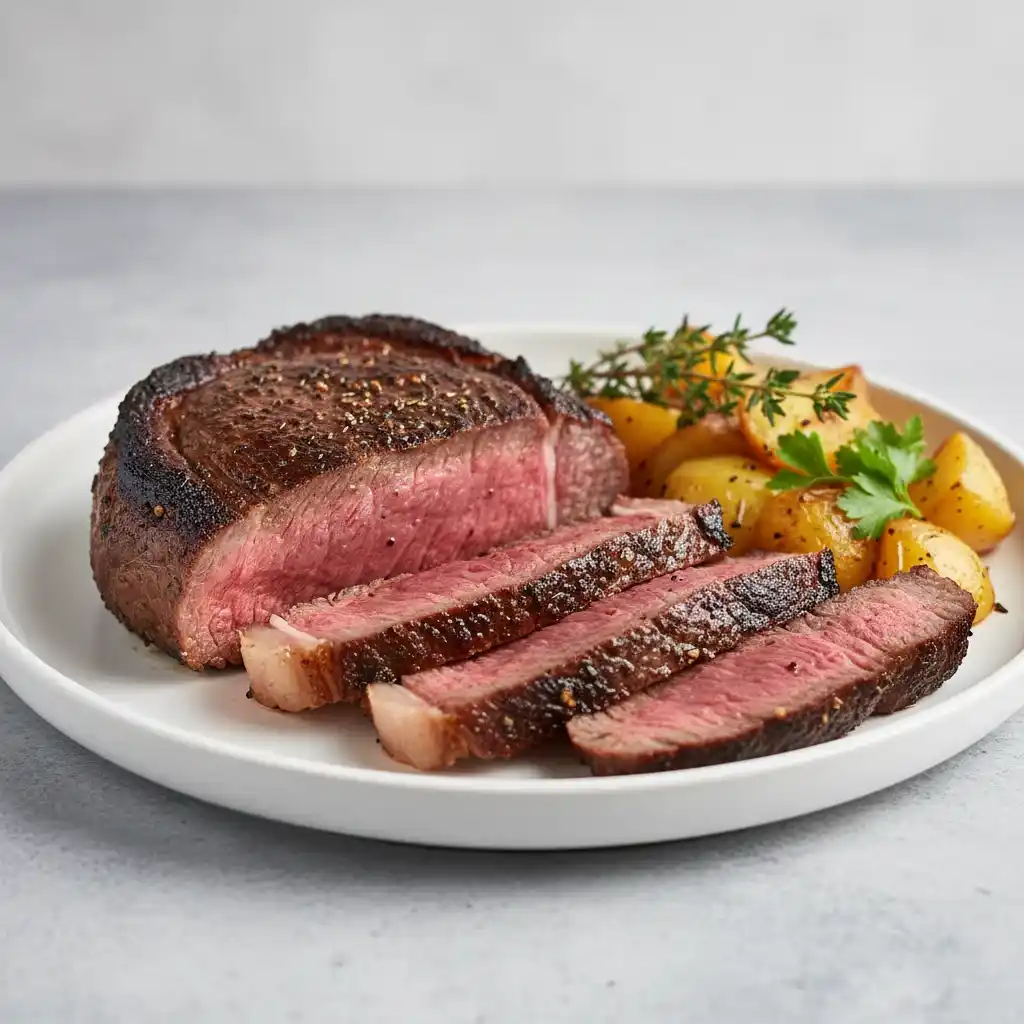
I grew up around people who believed that a good ribeye deserved real attention, not rushed heat or careless timing.
The first time I watched an older relative cook one the right way, I didn’t notice the seasonings or the pan as much as I noticed the calm in the room.
The steak went quiet in the skillet, then into the oven, and the whole kitchen felt slower, steadier, like everyone was waiting for that moment when the knife would glide through the center.
Years later, I still return to that same method when I want a steak that stays tender on the inside and develops that deep, browned crust on the outside.
It’s the kind of cooking that doesn’t need noise or performance—just a well-heated skillet, a hot oven, and a little focus.
When the steak rests afterward and the juices sink back into the meat, it feels like the reward for paying attention. This recipe follows that same calm rhythm.
It’s straightforward, steady, and built to give you a ribeye that looks and tastes as rich as the one you see above—rosy in the center, browned on the edges, and full of real flavor from the first slice to the last.
Ribeye Steak In The Oven Recipe
Ingredients
- 1 large ribeye steak, 1½–2 inches thick
- 1 tablespoon olive oil
- 1 teaspoon coarse salt
- ½ teaspoon black pepper, freshly cracked
- ½ teaspoon garlic powder
- ½ teaspoon onion powder
- 1 sprig fresh thyme (optional)
- 1 tablespoon unsalted butter (optional for basting)
Instructions
- Remove the steak from the fridge at least 30–40 minutes before cooking. This helps it cook more evenly and prevents the outside from overcooking before the inside warms.
- Pat the steak completely dry on all sides using paper towels. Drying helps it form that deep brown crust in the oven.
- Drizzle a light amount of olive oil over the steak and rub it in. Then season generously on all sides with salt, black pepper, garlic powder, and onion powder. Make sure the edges get seasoning too.
- Preheat your oven to 245°C (475°F). You need a very hot oven to create fast browning and seal in the juices.
- Place a heavy oven-safe skillet (cast iron works best) inside the oven while it heats up. A hot skillet helps the steak caramelize immediately instead of steaming.
- When the oven is fully preheated, carefully remove the hot skillet and place it on the stovetop over medium-high heat. Set the steak into the dry skillet. It should sizzle instantly.
- Let the steak sear for 1–1½ minutes without moving it. This builds the first layer of crust. Flip and sear the other side for another 1 minute.
- Add the thyme and butter to the pan. As the butter melts, tilt the skillet slightly and spoon the melted butter over the steak for 20–30 seconds for added richness.
- Transfer the skillet back into the oven. Cook for 3–6 minutes, depending on your preferred doneness. For a warm pink center similar to the photographed result, aim for about 4 minutes.
- Carefully remove the skillet from the oven. Use a meat thermometer if available: around 52–54°C (125–130°F) for medium-rare. The temperature will rise slightly as it rests.
- Transfer the steak to a plate or cutting board and let it rest for 7–10 minutes. Resting is crucial because it allows the juices to settle, so the steak stays moist when sliced.
- Slice the steak against the grain into thick, juicy strips. This makes each bite tender and flavorful.
- Serve immediately with your preferred sides, such as roasted potatoes or buttery vegetables.
What Makes Ribeye Steak In The Oven Turn Out So Juicy?
A ribeye stays juicy when you heat it the right way and allow enough resting time. The oven gives steady heat, so the inside cooks gently without drying.
- Even Heating: The oven warms the meat slowly, helping the center stay tender.
- Resting Time: Resting allows juices to settle back into the steak.
- Thick Cut: A thicker ribeye holds moisture better.
Your steak turns out tender because the heat enters gradually and doesn’t shock the meat the way very high flame can.
How Thick Should Your Ribeye Be For Oven Cooking?
Thickness affects how the heat moves through the meat. A ribeye that is too thin cooks too fast, and one that is too thick may need extra time.
- Ideal Thickness: A ribeye about 1½–2 inches thick cooks evenly and browns well.
- Why It Works: This thickness gives the outside enough time to create a rich crust while keeping the center warm and pink.
The right thickness makes it easier to reach the doneness you want without overcooking.
How Do You Season Ribeye For Oven Cooking?
Seasoning ribeye the right way helps build flavor before the meat even touches heat.
- Salt And Pepper: These two lift the natural flavor without covering it.
- Light Oil: A small amount helps the seasoning stick and helps browning.
- Extra Aromatics: Garlic powder, onion powder or herbs add depth if you enjoy more flavor.
Seasoning the meat well makes every slice taste rich, balanced and satisfying.
Why Should You Preheat The Skillet Before Cooking Ribeye In The Oven?
Heating the skillet in advance makes the biggest difference in getting that deep crust.
- Instant Sear: A hot skillet browns the moment the steak touches it.
- Moisture Control: Browning seals the surface so the moisture stays inside.
- Better Color: Preheating gives a darker, more even crust.
You get that restaurant-style outside because the surface meets immediate high heat.
What Oven Temperature Works Best For Ribeye Steak?
Your oven must be very hot for the crust to form quickly.
- High Temperature: A strong blast of heat lets the ribeye caramelize faster.
- Faster Browning: High heat stops the meat from releasing too much moisture.
- Even Finish: The inside warms without turning grey or dry.
The right temperature helps balance the soft center and browned outside.
How Long Should You Cook Ribeye Steak In The Oven?
Cooking time depends on thickness and doneness. You can check a thermometer if you want extra precision.
- Medium-Rare Range: Usually reached within a short 3–6 minute oven time after searing.
- Carryover Heat: The steak continues to warm slightly after you remove it.
- Resting Helps: The heat spreads evenly during resting, bringing the steak to the perfect finish.
Keeping track of time helps you avoid overcooking.
Why Is Resting The Steak Important?
Resting prevents juices from escaping too quickly when you cut the ribeye.
- Juice Redistribution: This helps the center stay moist.
- Better Texture: The steak stays soft, not tough or dry.
- Clean Slices: A rested steak cuts more neatly.
Resting ensures that every bite stays flavorful.
How Do You Slice Ribeye Steak For The Juiciest Results?
The direction you cut affects texture. Cutting the right way keeps the meat soft.
- Against The Grain: Slicing this way shortens the muscle fibers.
- Thick Strips: Thick slices keep the warmth and softness inside.
- Steady Cutting: Let your knife glide slowly to avoid squeezing juices out.
Correct slicing helps the ribeye taste better and feel smoother when eaten.
What Side Dishes Go Well With Oven-Cooked Ribeye?
Pairing the ribeye with sides makes the meal feel balanced and complete.
- Roasted Potatoes: Their mild flavor matches the richness of the steak.
- Vegetables: Soft, warm vegetables like carrots or beans add freshness.
- Herbs: A small touch of fresh herbs brings aroma without overpowering the meat.
Sides help highlight the steak’s strong flavor.
Can You Prepare The Ribeye Ahead Of Time?
Preparing ahead can make cooking easier without affecting taste.
- Season Earlier: Seasoning a little earlier helps the flavors settle in.
- Drying Before Cooking: Keeping the ribeye uncovered in the fridge helps dry the surface for better browning.
- Room Temperature Rest: Bringing the steak out before cooking helps it warm evenly.
Preparing early helps you cook with more control.
How Do You Store Leftover Ribeye Steak Properly?
Storing ribeye correctly keeps the taste and texture safe for later.
- Cool Before Storing: Allow the steak to cool fully before packing.
- Airtight Container: This protects it from dryness and keeps the flavor safe.
- Fridge Time: You can store the ribeye for up to 3 days.
Good storage keeps the steak soft and prevents off-flavors.
How Do You Reheat Ribeye Steak Without Drying It Out?
Reheating slowly helps protect the texture and moisture.
- Low Oven Heat: A gentle oven warming keeps the meat from turning tough.
- Slow Warming: This helps the steak heat evenly from edge to center.
- Light Researed Crust: A very quick pan reheat brings back the outer crispness.
Gentle heat restores the ribeye without overcooking.
Can You Freeze Cooked Ribeye Steak?
Freezing lets you save the steak for later without losing too much quality.
- Wrap Well: Tight wrapping helps prevent ice from forming on the meat.
- Store Up To 2 Months: The ribeye stays safe during this time.
- Thaw In Fridge: Slow thawing protects the texture.
Freezing gives you a convenient way to enjoy the ribeye later.
You May Also Like To Check Out These Recipes
- 55 Christmas Cake Ideas That Make Your Holiday Table Shine
- Best Prime Rib Recipe
- White Chocolate Cranberry Cookies
- Cranberry Christmas Cake
- Chocolate Yule Log Cake
- Christmas Cake Pops
- Christmas Tree Cake Cheesecake
- Beef Wellington
- Chicken Pot Pie
- Cranberry Jalapeño Dip
- Cranberry Pecan Cheese Ball
- Eye of Round Roast
- Slow Roasted Beef Tenderloin