
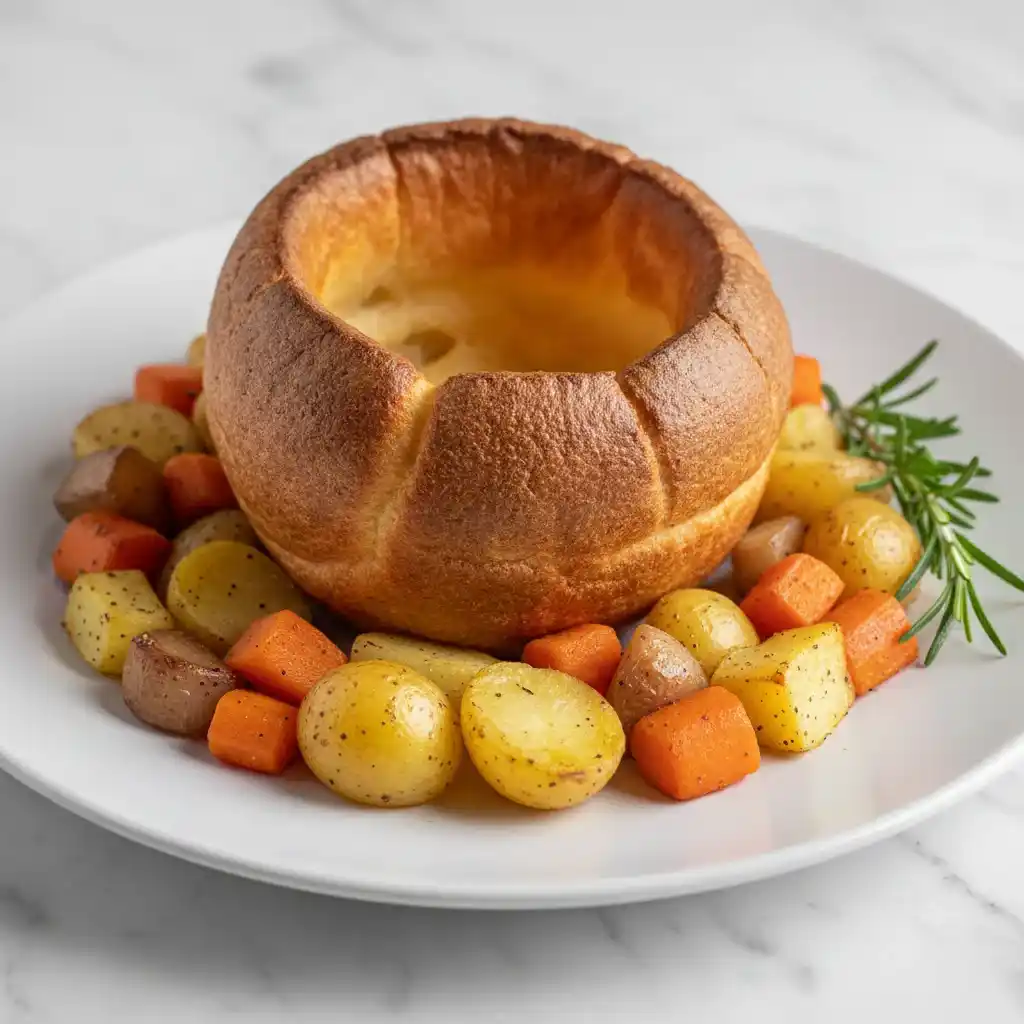
I still remember the first time I set a tray of gluten free Yorkshire puddings on the table and felt a mix of relief and pride.
I’d spent weeks trying to get that tall rise and hollow center just right. Each attempt taught me a little more about patience, heat, and how a batter behaves when it doesn’t have gluten to lean on.
The day they finally puffed up the way I wanted, the whole kitchen felt lighter.
What surprised me most was how a small change—swapping the ingredients to suit my needs—didn’t take away the joy of the dish.
The sound of the crisp edges cracking slightly under a knife, the warm steam escaping from the center, the golden shell that held its shape so proudly… all of it made the effort worth it.
I realized that this wasn’t just about a recipe turning out well; it was about proving to myself that gluten free food can still have the same spirit and texture as the traditional one.
Now, every time I make these, I pay close attention to the tiny details that keep them tall and airy.
It feels less like cooking and more like a calm ritual—heating the pan until it almost hums, whisking the batter until smooth, and trusting the oven to do its job without opening the door too soon.
And when those puddings rise high and golden, it still gives me the same quiet joy it did on that first successful day.
Gluten Free Yorkshire Pudding Recipe
Ingredients
For 6 large Yorkshire puddings (using a jumbo muffin tin or popover pan):
- 1 cup finely milled gluten-free all-purpose flour blend (with rice flour, potato starch, and tapioca starch)
- ½ teaspoon xanthan gum
- ½ teaspoon fine salt
- 4 large eggs, room temperature
- 1 cup whole milk, room temperature
- 4 tablespoons neutral oil with a high smoke point (such as sunflower or canola), divided
- Optional: a pinch of white pepper for subtle seasoning
Instructions
- Preheat your oven to 230°C (450°F). Place a jumbo muffin tin or popover pan on the middle rack while the oven heats. The pan itself must be blazing hot before the batter goes in, so do not skip preheating it.
- In a medium mixing bowl, whisk the gluten-free flour, xanthan gum, and salt until everything is evenly combined. This dry mix should look uniform with no visible streaks.
- In a separate bowl, whisk the eggs until smooth. Add the milk and whisk again until the mixture looks pale and slightly frothy.
- Pour the wet ingredients into the dry mixture gradually, whisking continuously. The batter should be silky and pourable, similar to thin pancake batter. If you see small lumps, keep whisking until the texture becomes completely smooth.
- Let the batter rest for 15 minutes at room temperature. This short rest hydrates the gluten-free flours and ensures an even rise.
- Once the oven is fully heated, carefully remove the hot pan and pour about 2 teaspoons of oil into each well. The oil should shimmer instantly from the heat.
- Quickly whisk the batter again, then pour it into each oiled well, filling each one halfway. The batter should sizzle slightly on contact—this helps create the lift and hollow center.
- Place the pan back into the oven immediately. Do not open the oven door during baking under any circumstance, as this can cause the puddings to collapse.
- Bake for 20–23 minutes until the puddings have risen dramatically and turned deep golden brown. They should be firm on the outside but feel light when lifted.
- Remove from the oven and gently lift each pudding out of the tin. Serve right away while they are crisp and steamy inside.
Why Didn’t My Gluten Free Yorkshire Pudding Rise?
A few small details can stop a Yorkshire pudding from rising, especially when working without gluten. Understanding these points helps you fix the issue the next time you make them.
- Cold Ingredients: Using cold eggs or cold milk slows down the rise because the batter needs warmth to expand properly. Bring both to room temperature before mixing.
- Pan Not Hot Enough: Yorkshire puddings need strong heat from the start. If the oil isn’t sizzling when the batter touches it, the structure won’t lift the way it should.
- Batter Too Thick: If the batter is heavy, it won’t trap steam well. A smooth, pourable consistency is important.
- Opened Oven Door: Opening the door early causes heat loss, and the puddings can collapse before the walls set.
- Not Enough Resting Time: The gluten free flour blend needs a short rest to hydrate, otherwise the texture stays dense.
Why Do Gluten Free Yorkshire Puddings Sink After Baking?
Sinking usually happens because the outer crust didn’t set firmly enough to hold the shape.
- Underbaking: If you remove them too soon, the inside stays too soft and the shell caves in. Leave them until they turn deep golden with firm edges.
- Too Much Moisture: Extra moisture in the batter makes the middle collapse once steam escapes. Follow the measurements exactly.
- Sudden Temperature Change: Taking the pan out too quickly or placing it in a cold spot will cause the puddings to deflate. Set the tray on a stable surface and avoid drafts.
- Thin Oil Layer: If there’s not enough hot oil, the walls won’t crisp properly. Make sure each well has the right amount before pouring the batter.
How Do You Keep Gluten Free Yorkshire Pudding Tall And Hollow?
This shape comes from a strong burst of steam and high heat. Here is an easy explanation to guide you:
- Very Hot Pan: The heat from the metal pan causes the batter to puff up almost instantly, creating that hollow center.
- Proper Batter Texture: A smooth, thin batter rises higher and forms crisp walls.
- Even Oven Temperature: Give the oven enough time to fully heat so every pudding lifts at the same speed.
- Enough Oil: The hot oil creates a barrier that helps the sides climb upward and stay tall.
What Is The Best Flour Blend For Gluten Free Yorkshire Pudding?
The flour blend decides the texture, color, and rise.
- Rice Flour Base: Gives lightness and helps the puddings rise well.
- Potato Starch: Adds a tender bite and gives the crisp edges people love.
- Tapioca Starch: Helps the batter stretch slightly so the puddings can expand without tearing.
- Xanthan Gum: Works like glue to hold everything together since there is no gluten.
Can You Make The Batter Ahead Of Time?
You can prepare it early, but you need to understand how it behaves when it sits.
- Short Rest: A brief rest helps hydrate the gluten free flour blend and gives better structure.
- Too Long Rest: Leaving the batter for many hours may reduce the rise because the eggs lose some lifting power.
- Rewhisk Before Using: A quick whisk before pouring helps bring back the smooth texture.
What Oil Should You Use For Gluten Free Yorkshire Puddings?
Oil affects the rise because it needs to withstand high heat without burning.
- High Smoke Point: Choose oils like sunflower or canola because they can heat until sizzling without turning bitter.
- Neutral Flavor: These oils keep the flavor simple and let the texture shine.
- No Butter: Butter burns too fast at the required temperature and won’t create the right lift.
How Do You Stop Gluten Free Yorkshire Puddings From Tasting Too Eggy?
A rich egg flavor can show up when the batter ratios are off.
- Balance Of Ingredients: Use the amount of milk and flour stated in the recipe to soften the egg taste.
- Fresh Eggs: Fresh eggs have a milder aroma compared to older ones.
- Hot Cooking Temperature: Strong heat helps caramelize the outside and reduces the egg-heavy flavor.
How Do You Serve Gluten Free Yorkshire Puddings So They Stay Crisp?
Serving them the right way keeps the shell firm and lightly crunchy.
- Serve Immediately: The puddings stay crisp right after baking when steam is still escaping.
- Separate From Moist Foods: Moist dishes soften them quickly, so place them on top instead of underneath.
- Reheat Fast: If they cool down, place them back in a very hot oven for a few minutes to revive the crispness.
How To Store Gluten Free Yorkshire Puddings?
Storing them correctly helps you keep their texture as close to fresh as possible.
- Cool Completely: Make sure they are fully cooled before storing so there is no trapped steam that could soften them.
- Airtight Container: Use an airtight box to keep air out and prevent them from drying too much.
- Refrigeration: If storing for up to two days, keep them in the fridge. They will lose crispness but stay safe to reheat.
- Freezing: You can freeze them for up to one month. Freeze them in a single layer first, then move to a container so they don’t stick together.
- Reheating: Warm them in a very hot oven until the edges crisp again. Do not microwave because it makes them chewy instead of crisp.
Can You Freeze Gluten Free Yorkshire Pudding Batter?
Freezing the batter can work, but the results may vary.
- Texture Change: The eggs may separate slightly after thawing, so you need to whisk well before using.
- Thaw In Fridge: Let the batter thaw slowly in the fridge instead of on the counter.
- Use Immediately After Thawing: The batter won’t hold well for long once thawed, so bake it right away for the best rise.
You May Also Like To Check Out These Recipes
- 55 Christmas Cake Ideas That Make Your Holiday Table Shine
- Best Prime Rib Recipe
- White Chocolate Cranberry Cookies
- Cranberry Christmas Cake
- Chocolate Yule Log Cake
- Christmas Cake Pops
- Christmas Tree Cake Cheesecake
- Beef Wellington
- Chicken Pot Pie
- Cranberry Jalapeño Dip
- Cranberry Pecan Cheese Ball
- Eye of Round Roast
- Slow Roasted Beef Tenderloin
- Perfect Rib Eye Steak In Oven
- Standing Rib Roast