
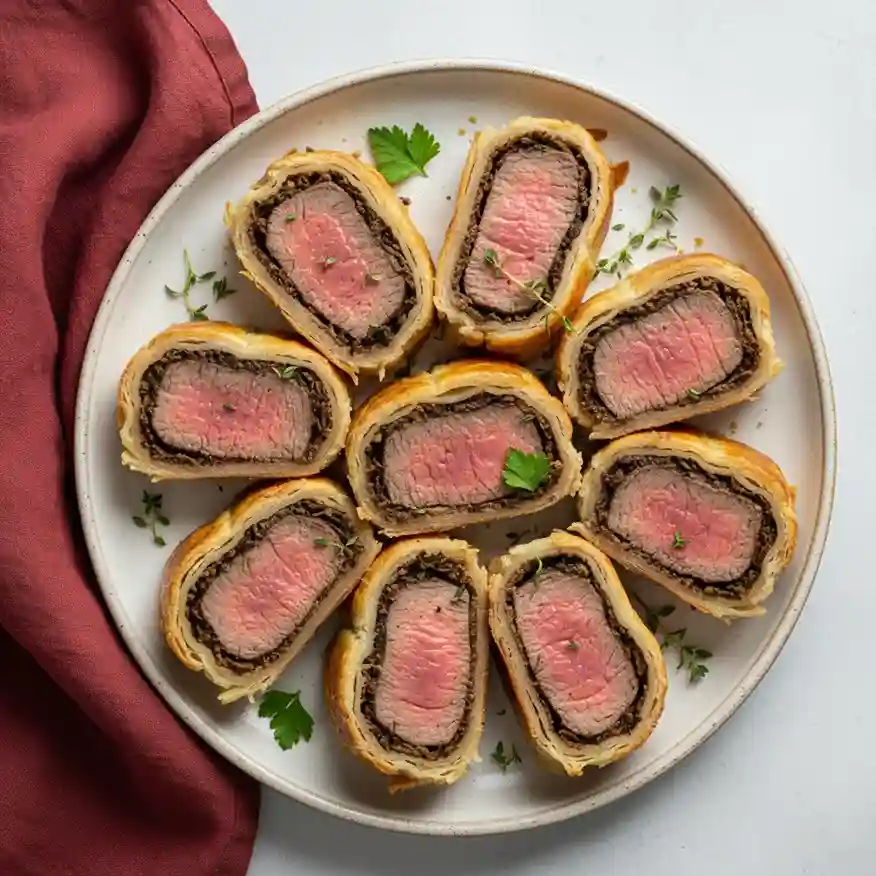
The first time a beef wellington came out of my own oven, I stood there for a moment just taking in the smell.
It was rich, warm, and carried that slow-building excitement that only shows up when you know you put real care into a dish.
I wasn’t rushing, and that made all the difference. Every step—from browning the meat to drying the mushrooms until they turned into a deep, savory paste—felt steady and almost calming.
When I sliced into it, the knife moved through the layers like it knew the path. Flaky pastry on the outside, tender meat in the center, and that dark mushroom layer holding everything together.
It felt rewarding in a very down-to-earth way, not dramatic, just honest satisfaction.
Since then, beef wellington has become the dish I pull out on days when I want the table to feel a bit more special. Not fancy—just thoughtful.
It carries a quiet charm, the kind that makes everyone slow their chewing for a second and look up with a tiny smile they can’t hide. It’s one of those meals that fills the room long before it’s served.
The recipe below gives you that exact experience: crisp pastry, juicy beef, and slices that look clean and confident every time.
Beef Wellington Recipe
Ingredients
- 1 center-cut beef tenderloin (about 1 kg), trimmed
- 1 ½ teaspoons salt
- 1 teaspoon black pepper
- 2 tablespoons whole-grain mustard
- 2 tablespoons oil
- 500 g mushrooms (button, cremini, or a mix), finely chopped
- 1 medium onion, finely chopped
- 3 garlic cloves, finely minced
- 2 tablespoons butter
- 4 sprigs fresh thyme, leaves removed
- 8–10 slices beef bacon or thin-cut cured beef
- 1 sheet puff pastry (large rectangle)
- 1 egg (for egg wash)
- 1 tablespoon water
- 1 tablespoon chopped fresh parsley (optional garnish)
Instructions
- Pat the beef tenderloin completely dry. Season all sides with salt and black pepper.
- Heat oil in a heavy pan over high heat. Once the pan is very hot, sear the beef on all sides until deeply browned, about 1 minute per side. Do not cook it internally; only brown the outside.
- Transfer the seared beef onto a plate and immediately brush all sides with whole-grain mustard while it is still warm. Let it cool completely.
- Prepare the mushroom duxelles by heating butter in a pan over medium heat. Add the finely chopped mushrooms, onion, and garlic. Cook until all moisture evaporates and the mixture becomes dry and paste-like, stirring frequently. This step usually takes 10–12 minutes.
- Add thyme leaves, season lightly with salt and pepper, and cook for another 1 minute. Remove from heat and allow the duxelles to cool fully.
- Lay a piece of cling film on your counter. Arrange the beef bacon slices in a slightly overlapping layer to form a rectangle big enough to wrap the beef.
- Spread the cooled mushroom mixture evenly over the bacon surface.
- Place the cooled beef tenderloin at one end of the layered bacon-and-mushroom sheet. Using the cling film, tightly roll everything into a compact log, twisting the ends of the film to secure the shape. Refrigerate for 30–40 minutes so it firms up.
- Place the puff pastry sheet on a lightly floured surface. Roll gently if needed to ensure it is slightly larger than the beef log.
- Remove the cling film from the chilled beef. Place the beef in the center of the pastry. Fold one long side over the log, then fold the other side on top, creating a seam underneath. Fold in the ends neatly like wrapping a present.
- Transfer the wrapped beef onto a lined baking tray with the seam side down.
- Make the egg wash by whisking the egg with water. Brush the entire pastry surface evenly.
- Using a small knife, lightly score the top of the pastry with diagonal or cross-hatch lines to create a decorative pattern, taking care not to cut through the pastry.
- Refrigerate the wrapped beef again for 10–15 minutes. This helps maintain shape and ensures even baking.
- Preheat the oven to 200°C (fan 180°C).
- Apply a second thin layer of egg wash for a deep golden finish.
- Bake in the center of the oven for 35–40 minutes or until the pastry is crisp and golden and the beef inside reads around 50–52°C for medium-rare when checked with a thermometer inserted into the center.
- Remove from the oven and let the Wellington rest for at least 15 minutes before slicing. This step is crucial to keeping the slices clean and preventing juices from leaking.
- Slice into even rounds using a sharp serrated knife.
- Garnish lightly with chopped parsley or thyme leaves before serving.
What Cut Of Beef Works Best For Beef Wellington?
The core of a good Beef Wellington is choosing the right cut, so this part needs careful attention.
- Center-cut beef tenderloin: This cut cooks evenly, stays juicy, and gives you a smooth, clean slice. It is naturally tender, so it doesn’t need long cooking.
- Even thickness: A uniform shape ensures the pastry doesn’t burn while the meat cooks.
- Well-trimmed piece: Extra fat or uneven edges make wrapping difficult, so use a cut that is already shaped for even roasting.
Choosing the right piece saves time and makes the finished Wellington look just like the final dish you want.
Why Does The Beef Need To Be Seared First In Beef Wellington?
Searing creates flavor and protects the meat from getting soggy once wrapped.
- Builds deep flavor: The browned surface adds far more taste than raw meat wrapped directly.
- Removes surface moisture: This is important because moisture is the enemy of crisp pastry.
- Gives structure: The seared layer helps the beef hold its shape during baking.
Even a quick, hot sear makes a noticeable difference in the final texture.
What Is Mushroom Duxelles And Why Is It Important?
The duxelles layer adds flavor and keeps moisture balanced.
- Finely chopped mushroom paste: It becomes thick and savory as it cooks.
- Prevents soggy pastry: Because the paste is dry, it acts as a barrier between the beef and pastry.
- Adds rich taste: It gives that deep mushroom aroma when you cut into the slices.
Cooking the mushrooms until all water evaporates is a key step you should not rush.
Should You Use Beef Bacon In Beef Wellington?
Beef bacon adds both structure and flavor to the Wellington.
- Helps wrap the meat tightly: It creates a secure layer around the beef.
- Adds saltiness: This balances the mildness of the tenderloin.
- Prevents direct moisture contact: It sits between the beef and the duxelles to protect the pastry.
Using beef bacon also helps the Wellington keep its neat, round shape.
How Do You Wrap The Beef Wellington Properly?
A proper wrap keeps the shape clean and the pastry flaky.
- Use cling film: This helps you roll the beef, mushrooms, and bacon into a tight log.
- Secure and tighten: Twist the ends of the cling film so the log becomes firm.
- Chill the log: This step holds everything together for a smoother pastry wrap later on.
A tighter wrap always results in sharper, professional-looking slices.
Why Does Puff Pastry Need To Be Chilled Before Baking?
Temperature control makes the pastry crisp and flaky.
- Cold pastry rises better: The layers puff beautifully when they meet the heat.
- Prevents melting: Warm pastry softens too fast and loses shape.
- Keeps the pattern sharp: Chilled dough makes your scored lines look neat.
Even a short chilling time gives the final Wellington a much cleaner finish.
How Do You Know When Beef Wellington Is Ready?
You can judge doneness based on temperature and pastry appearance.
- Golden pastry: A deep golden-brown color shows the layers are cooked.
- Internal temperature: Medium-rare usually sits around 50–52°C in the center.
- Firm shape: When the log feels stable and not too soft, it’s ready for slicing.
Letting it rest after baking will keep the juices inside the meat where they belong.
How Do You Slice Beef Wellington Without Breaking It?
A clean slice depends on the right technique.
- Use a sharp serrated knife: This prevents dragging and tearing the pastry.
- Cut in steady motions: Do not press too hard or the filling will shift.
- Let it rest: Resting helps everything stay in place when you cut.
This gives each piece an even look like the slices in the finished dish.
What Can You Serve With Beef Wellington?
Pairing it with the right sides makes the meal balanced and complete.
- Roasted potatoes: They match the texture of flaky pastry.
- Light greens: Such as blanched beans, sautéed spinach, or a fresh herb salad.
- Smooth sauces: A mild gravy or mushroom sauce works well without overpowering the meat.
Simple sides help the Wellington remain the star of the table.
How Do You Store Leftover Beef Wellington?
Proper storage keeps the leftovers safe and delicious.
- Cool completely: Never store it while warm because moisture builds.
- Wrap tightly: Use cling film or an airtight box to prevent drying.
- Refrigerate: Leftovers stay good in the fridge for up to 2 days.
- Reheat carefully: Heat slices in the oven so the pastry becomes crisp again, not soggy.
Avoid microwaving because it softens the pastry too much.
Can You Freeze Beef Wellington?
Freezing is useful when you want to prepare ahead.
- Freeze before baking: This gives the best texture when baked later.
- Wrap in multiple layers: Use cling film first, then foil to protect the pastry.
- Bake from frozen: Add extra time in the oven so the center heats through evenly.
Freezing the unbaked Wellington keeps the pastry crisp and fresh once cooked.