
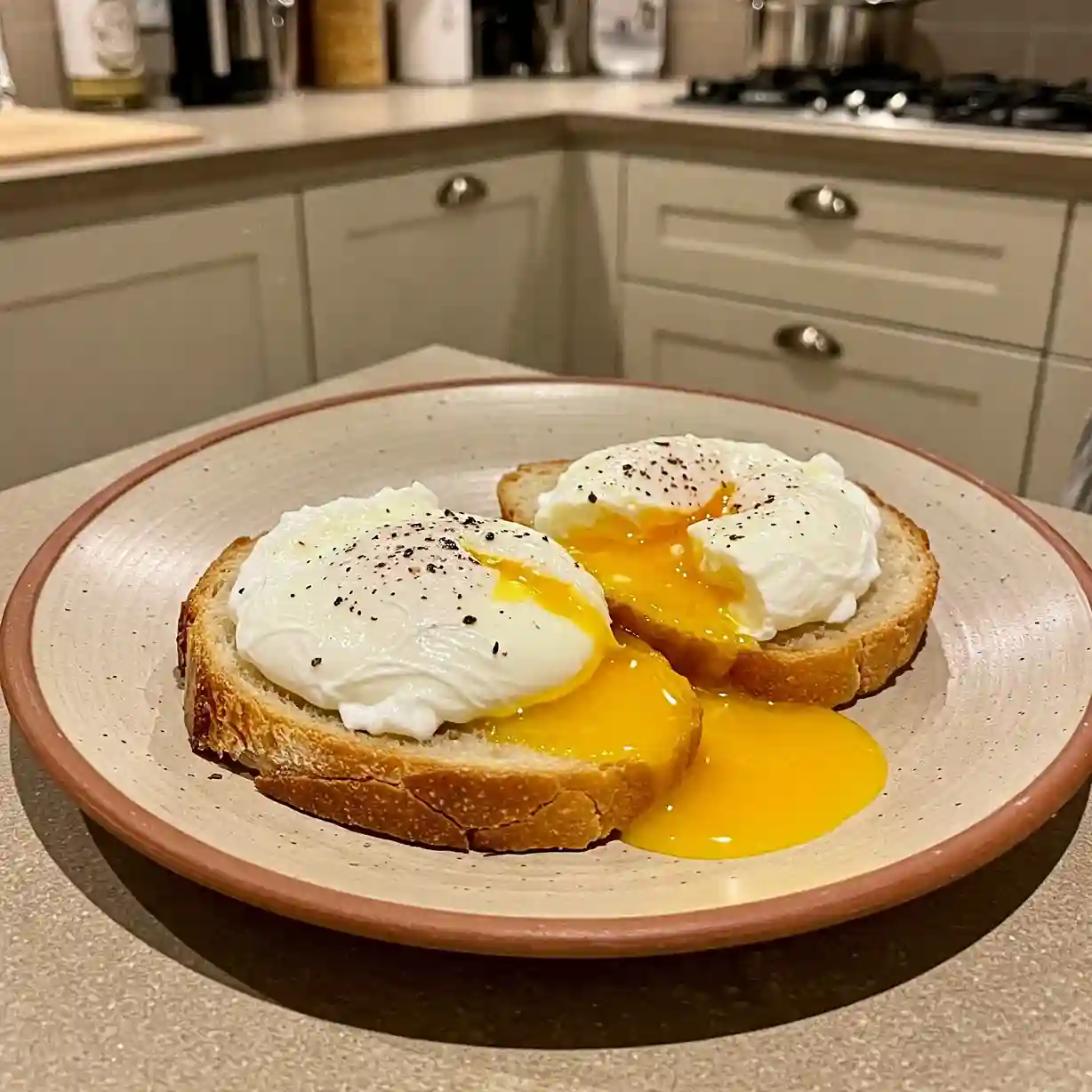
Saturday morning silence breaks with a soft swirl of water and the gentle landing of an egg.
In that moment, the kitchen feels calmer, as if everything pauses to wait for the whites to wrap themselves around a bright yolk.
Three unhurried minutes later, a smooth, snowy dome rises from the pan and rests on crisp toast.
Tap it once with a fork and liquid gold spills forward, soaking the bread and promising a rich first bite.
Poached eggs reward care, not speed. Fresh eggs cling together, a splash of vinegar guides the whites, and a steady simmer keeps the surface still.
Follow those cues and each egg will lift from the water as neat as a pearl, no ragged edges, no runaway strands.
Once you learn the rhythm—heat, swirl, slide, wait—you can serve a perfect pair at any hour, confident the yolks will flow just right.
Perfect Poached Eggs On Toast Recipe
Ingredients
- 2 fresh eggs (as fresh as possible)
- 1 tablespoon white vinegar (optional but recommended)
- 2 slices of crusty bread (sourdough or artisan-style works best)
- Water (enough to fill a medium-sized saucepan)
- Salt (a pinch for the water)
- Ground black pepper (to taste)
Instructions
- Fill a medium saucepan with water about 3 inches deep and place it over medium heat. Let it heat up until it reaches a gentle simmer—tiny bubbles should be rising from the bottom, but the water should not be boiling hard.
- Add a pinch of salt and the vinegar to the water. The vinegar helps the egg whites stay together while poaching.
- While the water heats, crack each egg into a small ramekin or bowl. This helps you slide the egg gently into the water without breaking the yolk.
- Once the water is gently simmering, take a spoon and give the water a gentle swirl to create a little vortex. This trick helps the whites wrap around the yolk more neatly.
- Slowly slide one egg into the center of the swirl. Let it cook undisturbed for about 2½ to 3½ minutes, depending on how runny or set you prefer the yolk. For the texture shown, 3 minutes is ideal.
- While the first egg is cooking, start toasting your bread slices until golden and crisp on the edges.
- When the egg is done, use a slotted spoon to lift it out of the water. Gently dab the bottom of the spoon with a paper towel to remove excess water.
- Repeat the poaching process with the second egg.
- Place each poached egg on top of a slice of toasted bread.
- Sprinkle with freshly ground black pepper and serve immediately.
Why Does Vinegar Help When Poaching Eggs?
Many people are surprised to learn that a tiny spoon of vinegar can make a big difference when poaching eggs. Here’s why it’s added to the water:
- Helps Egg Whites Set Faster: The vinegar increases the acidity of the water, which causes the egg whites to firm up more quickly once they hit the hot water.
- Keeps Egg Shape Neat: It helps the egg white stick closer to the yolk instead of spreading out in the pan, resulting in a rounder, more compact poached egg.
- Improves Overall Look: Without vinegar, the whites can get wispy and stringy. Vinegar reduces this and helps the egg look smooth and full.
You won’t taste the vinegar in the finished egg, so it’s completely safe and invisible in flavor.
If you’re worried, you can use a mild vinegar like white vinegar or apple cider vinegar in very small amounts.
What’s The Best Type Of Egg To Use For Poaching?
Choosing the right egg is the first and most important step for successful poaching. Not all eggs behave the same in hot water.
- Use Fresh Eggs: The fresher the egg, the better it holds together. Older eggs have thinner whites that spread out too much.
- Room Temperature Is Better: If your eggs are straight from the fridge, let them sit at room temperature for 10–15 minutes. Cold eggs can lower the water temperature too quickly.
- Don’t Use Cracked Or Damaged Eggs: These can break apart during poaching and cause a mess in your water.
Always check the packaging date if you buy eggs from a store. For home-raised eggs, aim to use them within a few days after being laid for best results.
Why Do Poached Eggs Sometimes Turn Out Stringy Or Messy?
If your poached eggs come out with a lot of thin white strands or look too soft and flat, it’s usually because of one of these common mistakes:
- Egg Isn’t Fresh: Older eggs have watery whites that don’t cling to the yolk properly.
- Water Is Boiling Too Hard: A gentle simmer is best. Strong boiling breaks up the egg as soon as it hits the water.
- Egg Was Cracked Directly Into The Pan: Always crack it into a small bowl first, then gently slide it in. This avoids splashing and helps control the drop.
- No Vinegar Used: Without vinegar, the whites take longer to set and can float around loosely.
- No Swirl Before Adding Egg: The swirling motion helps the egg wrap around itself neatly.
Can You Make More Than One Poached Egg At A Time?
Yes, but it takes a little more attention. Here’s how to make more than one without sacrificing quality:
- Use A Wide, Deep Pan: The eggs need room to spread slightly without bumping into each other.
- Crack Eggs Into Separate Bowls: Don’t pour them all at once. Slide them in gently, one at a time.
- Add Eggs In A Circle: If you’re doing 2–3 eggs, space them around the edge of the pan instead of the center.
- Don’t Overcrowd The Pan: Three eggs is usually the maximum for a standard pan. More than that can cool the water and cause uneven cooking.
- Time Carefully: Start a timer for each egg as you add them, so you remove them in the right order for consistent yolks.
With practice, you can poach 2 to 3 eggs at once without losing quality.
Can Poached Eggs Be Made In Advance?
Yes, poached eggs can be made ahead of time and saved for later. Here’s how to do it properly without ruining the texture:
- Use An Ice Bath Right After Cooking: When the eggs are done, transfer them immediately into a bowl of cold water with ice. This stops the cooking and keeps the yolk from hardening.
- Store In Cold Water In The Fridge: Keep the poached eggs in a sealed container, submerged in cold water. This keeps them moist and prevents them from sticking together.
- Reheat Gently In Warm Water: When you’re ready to serve, heat water to about 160–170°F (not boiling). Gently place the eggs in for about 30–45 seconds. They’ll warm up without overcooking.
Poached eggs stored this way can last for up to 24 hours in the fridge and still taste fresh.
What Bread Is Best To Serve With Poached Eggs?
The right bread can make a big difference because it soaks up that rich yolk beautifully. Here are some top choices:
- Sourdough: Its crisp crust and chewy texture hold up well under the warm egg and yolk.
- Whole Grain Bread: Adds a nutty taste and extra nutrition. Great for a heartier breakfast.
- English Muffins: A traditional choice if you’re building a larger meal like eggs Benedict.
- Rustic Artisan Loaf: Thick-cut slices are ideal for absorbing the runny yolk without getting soggy too quickly.
- Gluten-Free Bread: Works well as long as it toasts up firm and holds its shape.
Toasting the bread is important—it gives a contrast in texture and keeps the base from getting too soft when the yolk hits it.
How Do You Know When A Poached Egg Is Cooked Perfectly?
Timing matters, but so does knowing what signs to look for:
- The White Should Be Set: It should look firm and hold its shape without runny bits.
- The Yolk Should Be Soft: Press gently with a spoon—it should feel springy but not hard. If it jiggles a little, it’s still runny inside.
- No White Floating In The Pan: If your egg left behind a lot of wispy bits, the water may have been too hot or the egg too old.
- 3 Minutes Is Usually Ideal: Most eggs reach perfect consistency in 2½ to 3½ minutes, depending on size and starting temperature.
If unsure, you can always take one out early, slice it open, and adjust your timing for the next one.
How Should You Store Leftover Poached Eggs?
Leftover poached eggs can still be soft and delicious if stored the right way. Here’s how:
- Cool Them Fast: Right after poaching, place eggs in an ice water bath to stop the cooking.
- Keep Them In Cold Water: Store in a covered container in the refrigerator. The eggs should stay fully submerged in water to stay moist and prevent drying out.
- Use Within 24 Hours: For the best taste and texture, use the eggs the same day or by the next day.
- Warm Them Gently Before Serving: Don’t microwave. Instead, place the eggs in hot (not boiling) water for about 30 to 45 seconds until warmed through.