
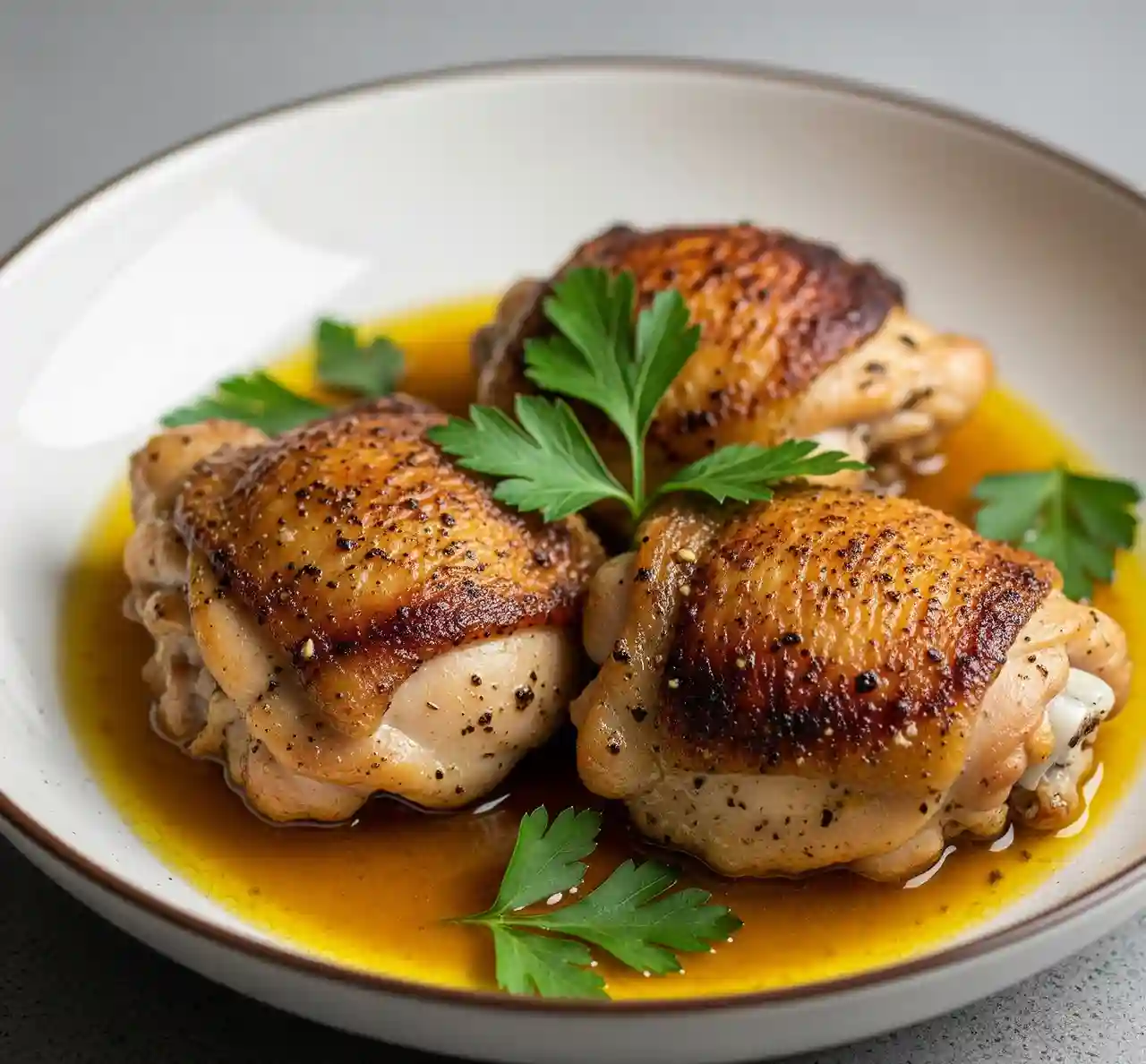
The name says it all—this chicken melts in your mouth. Not in a soft or soggy way, but in a deep, satisfying way that happens when the skin crisps up just right and the inside stays juicy all the way through.
What makes it really shine is the buttery garlic sauce that settles at the bottom of the pan and clings to each bite without overpowering it.
The way the golden skin holds onto all that flavor while the meat stays fork-tender is exactly what you want from oven-roasted chicken thighs.
This isn’t thrown together—it’s cooked with intention. First, the skin is seared until it’s deeply golden and just slightly crisp.
Then the garlic, butter, lemon, and a splash of broth take over, working together in the oven to finish the job. You end up with rich pan juices and chicken that barely needs a knife.
Spoon the sauce on top, and you’ve got the kind of meal that feels slow-cooked, full-bodied, and balanced. Every step is doing something—and it shows on the plate.
Melt In Your Mouth Chicken Recipe
Ingredients
- 6 bone-in, skin-on chicken thighs (room temperature)
- 2 tbsp olive oil
- 1 ½ tsp sea salt
- 1 tsp freshly ground black pepper
- 1 tsp garlic powder
- 1 tsp onion powder
- ½ tsp smoked paprika (optional, for color and warmth)
- 2 tbsp unsalted butter
- 3 cloves garlic, minced
- ¾ cup low-sodium chicken broth
- 2 tbsp fresh lemon juice
- 1 tsp Dijon mustard
- 1 tsp cornstarch (optional, for slightly thickened sauce)
- Fresh parsley, for garnish
Instructions
- Preheat your oven to 400°F (200°C). Pat the chicken thighs dry thoroughly with paper towels. Dry skin is key to achieving that crisp, golden finish.
- In a small bowl, mix salt, black pepper, garlic powder, onion powder, and smoked paprika. Rub this seasoning mix generously over each chicken thigh, covering both the skin and underside.
- Heat olive oil in a large, ovenproof skillet over medium-high heat. Once the oil is hot, place the chicken thighs skin-side down and sear for 4–5 minutes until the skin is deep golden and crisp. Flip and sear the underside for 2 minutes, then remove the chicken temporarily.
- In the same skillet, lower the heat to medium. Add the butter and let it melt. Stir in minced garlic and sauté for 30 seconds until fragrant.
- Pour in the chicken broth, lemon juice, and Dijon mustard. Stir to combine, scraping up any flavorful bits stuck to the pan. If using cornstarch, whisk it with 1 tbsp cold water in a separate bowl and stir into the sauce now.
- Return the chicken thighs to the skillet, skin-side up. Spoon a bit of the sauce over each piece without soaking the crispy skin.
- Transfer the skillet to the oven and bake uncovered for 25–30 minutes, or until the internal temperature of the chicken reaches 175°F (80°C) and juices run clear. The skin should be crisp and the meat extremely tender.
- Remove from the oven and let rest for 5 minutes. Spoon over the buttery pan sauce and garnish with freshly chopped parsley before serving.
What Makes This Melt In Your Mouth Chicken So Tender?
This chicken stays incredibly juicy and soft because of the way it’s cooked—slow roasting after searing locks in flavor and moisture.
- Searing the skin first: Browning the skin creates a barrier that helps keep the juices inside the meat as it bakes.
- Bone-in, skin-on chicken thighs: These naturally have more fat and flavor compared to boneless cuts, so they stay tender.
- Buttery garlic-lemon sauce: The fat from the butter and acidity from the lemon break down the fibers in the meat, making it even softer.
- Gentle oven baking: Cooking at a steady 400°F allows the chicken to bake through evenly without drying out.
Can I Use Boneless Chicken For This Recipe?
You can use boneless chicken thighs or breasts, but the texture and flavor will be a bit different.
Boneless chicken cooks faster, so you’ll need to shorten the baking time by about 10–15 minutes depending on thickness. But keep in mind:
- Less fat: Boneless cuts tend to dry out quicker.
- No crispy skin: If you use skinless pieces, you’ll miss the golden top layer that adds flavor and texture.
- Flavor loss: Bones add richness during cooking. Without them, you may want to use extra broth or a splash of cream to boost the sauce.
It still works well for quicker meals, but for the full melt-in-your-mouth effect, bone-in with skin is the way to go.
What Should I Serve With Melt In Your Mouth Chicken?
This dish creates a rich buttery sauce, so pair it with sides that soak up that flavor or balance the richness.
- Mashed potatoes: Creamy and smooth, perfect for holding the pan sauce.
- Steamed rice or buttered rice: Soaks up the sauce beautifully.
- Roasted vegetables: Carrots, zucchini, and broccoli go well with the lemony butter base.
- Crusty bread: A slice of toasted sourdough or French bread is ideal for dipping in the sauce.
- Light salad: Arugula or spinach tossed with a little olive oil and lemon juice can balance out the richness.
How Can I Make The Skin Extra Crispy?
Getting that golden, crackly skin depends on a few small but important steps:
- Dry the chicken well: Use paper towels to pat the skin completely dry before seasoning or searing.
- Don’t overcrowd the pan: Give each thigh some space so the skin can crisp up instead of steaming.
- Start in a hot pan: The oil should be shimmering when you add the chicken.
- Bake uncovered: Never cover the skillet in the oven—it traps steam and softens the skin.
- Avoid basting the top: Pour sauce around the chicken but don’t spoon it over the skin until serving.
Can I Make This Chicken Ahead Of Time?
Yes, and it actually tastes even better a few hours after baking as the flavors deepen. But there are a few ways to make it work smoothly:
- Prep in advance: You can season and sear the chicken up to a day ahead. Store it in the fridge, then finish baking before serving.
- Fully cook and reheat: Bake the full recipe, let it cool, then store in an airtight container. Reheat gently at 300°F in the oven to keep it moist.
- Sauce storage: Store extra sauce separately in a small container and reheat on the stove. Spoon it over the chicken just before serving to refresh the flavor.
Keep the chicken skin-side up during storage to avoid it turning soggy.
How Do I Store Leftover Chicken?
If you have any leftovers, store them properly so the chicken stays flavorful and moist.
- Refrigerate: Let the chicken cool fully, then place in an airtight container. Store for up to 3 days.
- Freeze: You can freeze the cooked chicken (with or without sauce) for up to 2 months. Wrap tightly and use freezer-safe containers.
- Reheat gently: To keep the texture nice, reheat in a 300°F oven for 10–15 minutes. If it’s frozen, thaw in the fridge overnight first.
- Don’t microwave the skin: It can turn rubbery. Instead, reheat in the oven or in a covered skillet on low heat.
Keep the sauce stored separately if possible so it doesn’t soak into the skin during storage.
How Do I Know When The Chicken Is Fully Cooked?
The best way is to use a meat thermometer. Chicken thighs should reach an internal temperature of 175°F (80°C). At this point, the meat is fully cooked and incredibly tender.
If you don’t have a thermometer, you can:
- Check the juices: Pierce the thickest part and the juices should run clear.
- Test the texture: The meat should pull away easily from the bone with little resistance.
Avoid cutting too early—let the chicken rest 5 minutes after baking so the juices settle and stay inside.
Can I Make This Dish Spicy?
Yes, you can easily add heat without changing the base flavor too much.
- Add chili flakes: Sprinkle over the chicken before baking for a gentle kick.
- Mix cayenne into the dry rub: Even a small amount adds warmth.
- Stir in hot sauce: Add a spoonful of your favorite hot sauce into the garlic butter mixture for a richer, spicier base.
What If I Don’t Have Dijon Mustard?
If you’re out of Dijon, here are a few swaps that still give depth and balance to the sauce:
- Regular yellow mustard: Milder and slightly tangier, but works fine.
- Grainy mustard: Adds a bit more texture and bite.
- A touch of vinegar: Use a splash of white wine vinegar or apple cider vinegar for acidity if you want to skip mustard altogether.
Dijon helps balance the richness of the butter, but the dish is still flavorful without it.